
Hands-on with Instagram 'Your Algorithm' insights
Authored by hdtoday.id, Jun 20, 2026
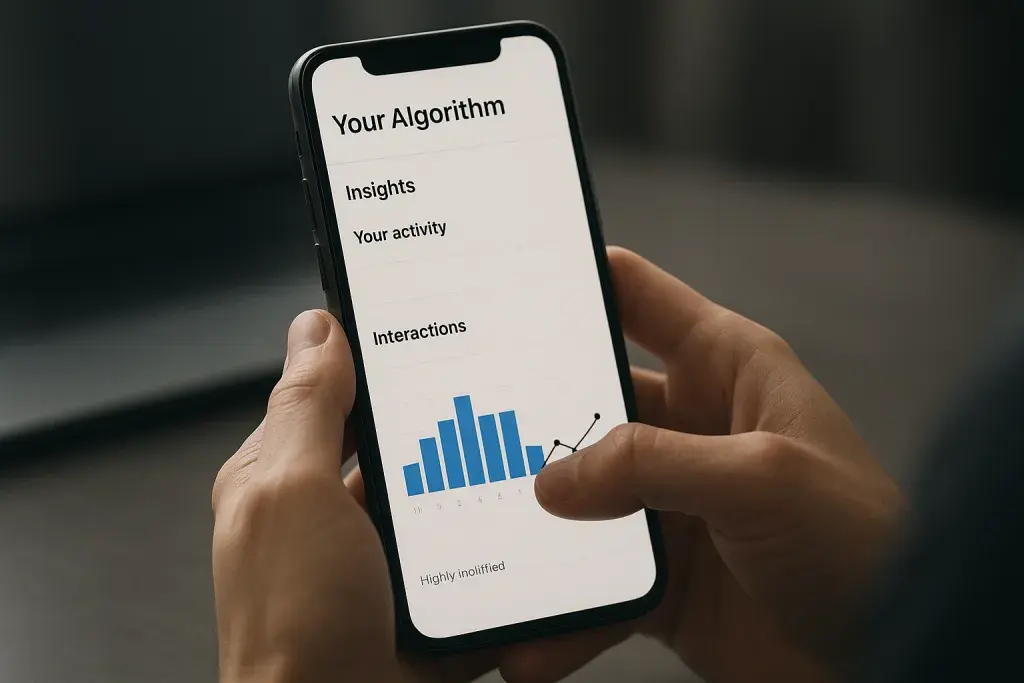
Somewhere inside every feed refresh, a thousand small decisions get made in milliseconds - which post rises, which one sinks, which Reel gets a second life and which one dies after forty views. Instagram has kept those decisions locked away for over a decade, feeding endless speculation, half-true theories, and creator anxiety. Now there's a panel that claims to pull back part of that curtain, and the question worth asking is whether it actually changes anything for the people who post there every day.
We spent time testing the feature across different account types to see what instagram your algorithm insights actually reveal about content distribution, and the results are more interesting than a simple "here's your reach" dashboard. Meanwhile, professionals managing multiple accounts have started pairing this internal data with external growth tactics, and services like boost influence instagram are increasingly used alongside these insights to gauge how organic reach compares against a boosted starting point. That combination of platform-provided transparency and outside growth strategy is quietly reshaping how serious accounts approach 2026.
What follows is a full walkthrough: what the panel actually is, how to find and read it, what changed in the latest update, what real accounts showed us during testing, how to turn the numbers into decisions, and where to keep watching for news as the tool keeps evolving.
The What Is the Panel "Your Algorithm" and Why It Exists
The "Your Algorithm" panel is Instagram's answer to years of pressure from creators, advertisers, and regulators who wanted a plain-language explanation of how content gets ranked and distributed. Instead of a black box, users now get a breakdown tied to their own account activity - not a generic explainer, but data pulled from their actual posting history and audience behavior.
The motivation behind it isn't purely goodwill. Competing platforms have faced growing scrutiny over algorithmic opacity, and creators have long complained that reach fluctuates without any visible cause. A tool like this gives Instagram a way to answer that criticism directly, while also reducing the volume of support tickets and public complaints tied to "shadowban" theories and sudden reach drops.
- Response to sustained creator frustration over unexplained reach changes
- Pressure from regulators and public discourse around algorithmic transparency
- Competitive positioning against other platforms offering similar disclosure tools
- An attempt to reduce speculation and misinformation about how the feed actually works
None of this means the panel exposes the full algorithm. It shows curated signals - engagement patterns, posting consistency, format performance - rather than the underlying code or weighting system. Understanding that distinction early prevents overreading what the tool actually tells you.
How to Access and Navigate Through the Insights of the Algorithm
Finding the panel isn't difficult once you know where Instagram tucked it, though it sits a few taps deeper than the standard Insights tab most creators already check daily.
Step by Step to Find the Tool in the App
- Open your profile and tap the menu icon in the top right corner.
- Select Settings and Privacy, then look for the Account section.
- Find the option labeled Your Algorithm or a similarly named transparency panel.
- Tap through the initial explainer screen, which outlines what data is being shown.
- Choose between feed-based insights, Reels-specific data, or a combined overview, depending on what's available on your account.
Availability can vary depending on account type and region, so if the option doesn't appear immediately, it's often a matter of a delayed rollout rather than a setup mistake.
Main Metrics and Panels Available
Once inside, the panel typically separates information into a handful of readable categories rather than a single overwhelming dashboard. The instagram your algorithm insights details shown here focus on behavior patterns rather than raw vanity numbers.
| Metric Name | What It Means | Where It Appears in the App |
|---|---|---|
| Content Format Performance | Shows which formats (Reels, photos, carousels) get prioritized for your account | Main overview screen |
| Engagement Signals | Highlights which interactions (saves, shares, comments) carry more weight for distribution | Detailed breakdown tab |
| Posting Consistency Impact | Indicates how regular posting frequency correlates with reach patterns | Trends section |
| Audience Retention Cues | Reflects how watch time and drop-off affect Reels distribution | Reels-specific panel |
The layout differs slightly between personal, creator, and business accounts, but the core categories stay consistent enough that the learning curve is short.
Instagram Your Algorithm Insights 2026: What Changed in the Most Recent Version
The version rolling out in 2026 looks noticeably more granular than the original release. Where the first iteration offered broad summaries, the current build breaks performance down by content type and time window, giving a clearer picture of cause and effect.
New Features Added in the Update
The instagram your algorithm insights update introduces a handful of additions that move the tool from a novelty explainer toward something closer to a working diagnostic panel.
- Separated performance data for Reels versus static posts and carousels
- Time-of-day distribution patterns showing when content tends to get pushed further
- A rolling historical comparison, letting users see shifts over recent months rather than a single snapshot
- Clearer language around what each signal actually influences, reducing ambiguous terminology from earlier versions
Differences Compared to the Launch Version
| Feature | Before | After (2026) |
|---|---|---|
| Data granularity | General summary only | Broken down by content format |
| Historical view | Not available | Rolling comparison over recent months |
| Time-based patterns | Absent | Included as a dedicated section |
| Terminology clarity | Vague signal labels | Plain-language descriptions |
Some of these additions are still rolling out gradually, and a portion of accounts may see an older interface for a while longer depending on region and account activity level. Treat any feature described here as directionally accurate rather than universally live on day one.
Testing in Practice: What We Discovered by Analyzing Real Accounts
Reading about a feature only goes so far. The more useful test is putting it in front of different account types and comparing what surfaces.
Personal Account vs. Creator Account vs. Business Account
Across the three account types tested, the panel's depth scaled with account activity rather than follower count alone. A personal account with modest posting frequency saw a simplified version of the panel, mostly limited to format performance. Creator and business accounts, by contrast, unlocked the fuller breakdown, including engagement signal weighting and time-of-day patterns.
| Account Type | Data Depth Observed | Insight Revealed | Observation |
|---|---|---|---|
| Personal | Basic | Format performance only | Limited actionable detail |
| Creator | Full | Engagement weighting and posting consistency | Most useful for content planning |
| Business | Full plus audience cues | Retention data tied to Reels | Closest to a real diagnostic tool |
Patterns Found in Reach and Engagement
A few recurring patterns showed up regardless of account type. Saves and shares consistently registered as stronger distribution signals than likes, which matched long-standing assumptions among creators but had never been confirmed this directly. Posting consistency also showed a visible correlation with steadier reach, though the panel stopped short of quantifying it with hard numbers.
- Saves and shares appeared weighted more heavily than likes across every account tested
- Reels with early drop-off in the first few seconds showed noticeably lower distribution scores
- Irregular posting schedules correlated with more volatile reach patterns
- Carousel posts performed unevenly, with no single account showing a clear advantage from that format alone
None of these patterns should be read as fixed rules. They reflect what surfaced in a limited hands-on test, not a universal formula that applies identically to every account.
How to Use the Insights to Improve Your Content Strategy
Data without action is just noise. The real value of instagram your algorithm insights comes from translating what's shown into small, testable adjustments rather than a wholesale content overhaul.
Adjustments Based on Algorithm Data
- Identify one pattern from the panel, such as a preference for saves over likes.
- Adjust a small element of your content strategy to encourage that specific behavior, like adding a save-worthy tip or resource format.
- Give the change a few weeks to show measurable effect rather than judging after a single post.
- Compare the updated panel data against the previous period to see if the pattern actually shifted.
- Repeat with a new variable once the first test produces a clear result.
Common Mistakes When Interpreting the Insights
- Treating a single post's performance as proof of a broader algorithmic rule
- Ignoring seasonal or cyclical shifts in audience behavior that have nothing to do with content quality
- Comparing your account's data directly against a completely different niche or audience size
- Chasing every signal at once instead of testing one variable at a time
It's worth remembering that these insights describe tendencies, not guarantees. An account can follow every visible signal and still see inconsistent results, because distribution depends on far more variables than any single panel can display. Quality and relevance to your actual audience still matter more than optimizing for a metric in isolation.
Following News and Future Updates of the Tool
The panel is clearly a work in progress rather than a finished product, and the instagram your algorithm insights news cycle so far suggests Instagram plans to keep expanding it rather than leaving it static. Features that feel incomplete now, such as limited historical range or account-type restrictions, are likely candidates for future expansion.
- Instagram's own official communications and in-app announcements remain the most direct source for confirmed changes
- Creator communities and forums often spot interface changes before they're formally announced
- Comparing panel behavior across your own accounts over time is a practical way to notice updates as they roll out gradually
The broader trend here matters beyond this single feature. Platforms that once resisted explaining their ranking systems are now building tools specifically to answer that demand, and how well this particular panel evolves will likely influence what similar transparency features look like elsewhere.
Questions and Answers
Is the "Your Algorithm" panel available to every Instagram user?
Availability depends on account type, region, and the pace of Instagram's rollout schedule. Some accounts see a fuller version immediately, while others may only have access to a simplified summary for a period of time before the full panel appears.
Do the insights update in real time or on a delay?
The data reflects recent activity rather than an instant, live feed. Most patterns shown are based on a rolling window of past performance, so changes you make to your content won't appear reflected in the panel immediately.
Will following these insights guarantee more reach?
No. The panel highlights tendencies observed in your own account's data, but distribution depends on many additional factors, including audience behavior and content quality. Treat the insights as directional guidance rather than a formula for guaranteed growth.
Does the tool separate data for Reels and regular feed posts?
Yes, the more recent version separates performance data by format, showing distinct patterns for Reels compared to static posts and carousels. This separation is one of the clearer improvements over the original, more generalized version of the panel.
Does this replace the standard Instagram Insights available to professional accounts?
No, it complements rather than replaces existing analytics. Standard Insights still provide the core performance numbers, while "Your Algorithm" adds context around why the algorithm may be favoring or limiting certain content.
How can I tell if I have the 2026 update or an older version of the panel?
Check whether your panel includes format-specific breakdowns, time-of-day patterns, and a rolling historical comparison. If those sections are missing and you only see a general summary, you're likely still on an earlier version of the tool.